Goh Bugun - Our Story
(Sushruti, on the journey that the DDF team has taken with the Bugun people)
The Goh Bugun story is about the revival of a culture. Here is how it began.
This is the journey of women like Chom Mosbu, a first-time weaver from Bichom, which is a resettled village at the catchment of the Bichom dam. A young mother, Chom learned warping and weaving techniques during our workshop in May 2024 from Momtaz Hagam, a local elder. Today, she works at her own pace from home or with her community of sisters and friends, while her child watches from his perch on her back. What is conserved is a home, a culture of parenting, an absorptive learning space for the next generation to learn in, and an autonomy over time and space that characterizes such communities.
What is created is a livelihood opportunity that is rooted in her cultural memory, and this for me is the true meaning of sustainability. So many layers of this story are yet to take form and so many sharp turns to be negotiated, but this story begins in early 2023.
The question that provoked a first visit was – how traditional knowledge can enable communities to encounter emerging contexts of new markets, new knowledge, and new aesthetics. What started as a lone journey to a forest dwelling, with a nagging question in mind, slowly gathered a team and a strategy.
APRIL 2023
A Bird Calls From The Mountains
A conversation with ecologist Ramana Athreya
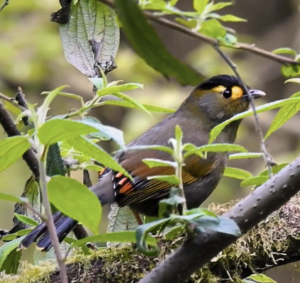
I was first introduced to the Bugun of Singchung, the biggest of the 11 Bugun villages through their association with the Eaglenest Sanctuary. The new to science bird, Bugun Liocichla, so named in 2006 by Dr. Ramana Athreya of IISER Pune, to mark its discovery in their community forests, had permanently fused the identity of the sanctuary and the community. Dr. Athreya’s nearly 3 decade relationship with Eagle Nest Sanctuary is backed by rigorous scientific work that happens at his biodiversity lab at IISER Pune. He is convinced that ecotourism and conservation can combine to create valuable stakeholdership for the communities in the region. But what is the most appropriate way to collaborate with such communities?
DECEMBER 2023
Traveling Far And Long To Meet The Bugun
Through 2023 I continued to visit the villages of Singchung, Bichom, Dikhiyang, Namphri, Wanghoo every two to three months. West Kameng just seemed too far away from our world. But the late night flights, long drives and crazy schedules did nothing to deter me, for an intriguing conversation had begun with the Bugun. While a DDF team was being forged through meetings and conversations in Pune, Delhi and Bangalore the winter months in Bugun villages saw celebrations of the festivals of harvests, invoking the spirits, the trees of the forests, plentiful food, foraged and fished for!
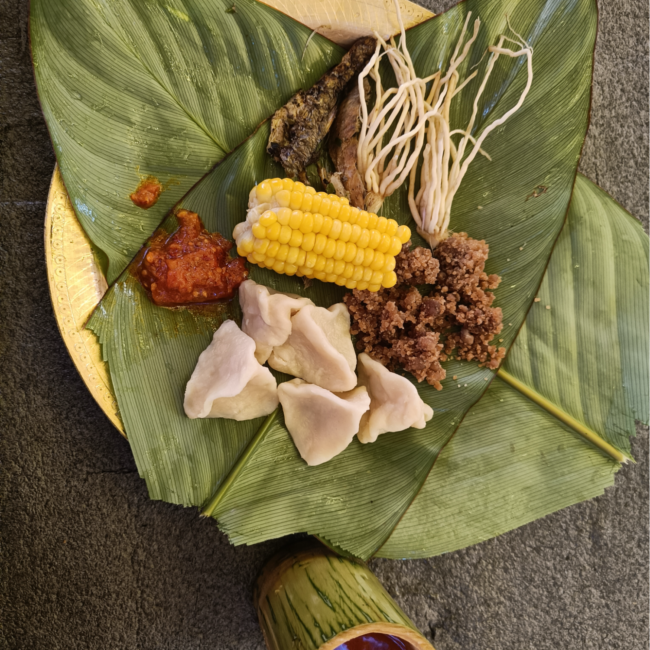
"No Exotics, No Pretense, Just Open Honest Conversations"
Meeting Dawa Sarai and more supporters
The Gaon Bura (The Village Council Head) of Singchung Village, Mr. Dawa Sarai, an ex-army man and a respected leader of uncommon wisdom, was the first one to recognize the value of the work we were proposing. His strong support and his keen perceptive intervention gave the project tremendous leverage. Shaleena Phinya, a bright young woman, a photographer, filmmaker, chronicler and documenter of stories, was the first Bugun I met. Through her eyes, I saw the aspirations of the young Bugun. Their education, work, ritual identity, political status, ancient memory and future opportunities were always all discussed in the same breath by the Bugun youth.
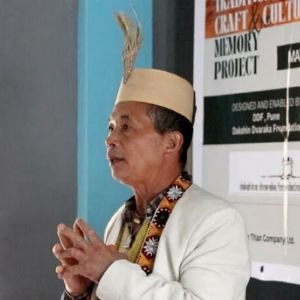
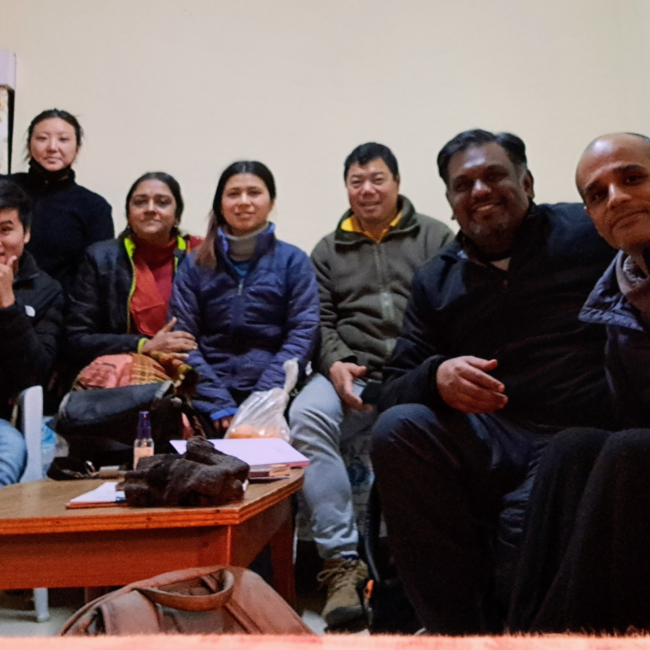
"We don't Know About Weaving, But We Make Gale"
The polite but shy people of the Bugun villages invited me into their homes, festivals, ceremonies, their farms and their forests, shared their food, tea, rice beer and fizzy drinks, along with stories and philosophies. They listened patiently when I said I was looking for stories about a culture of making things and making stories. What are the crafts here? Weaving, carving, bamboo work? But they all said one thing in common…. “ We don’t know about weaving, but one or two women make Gale (the cloth wrap that women wear)”, starkly highlighting to me the fact that weaving here was about making objects of a living culture and not a commodity that yields livelihood.
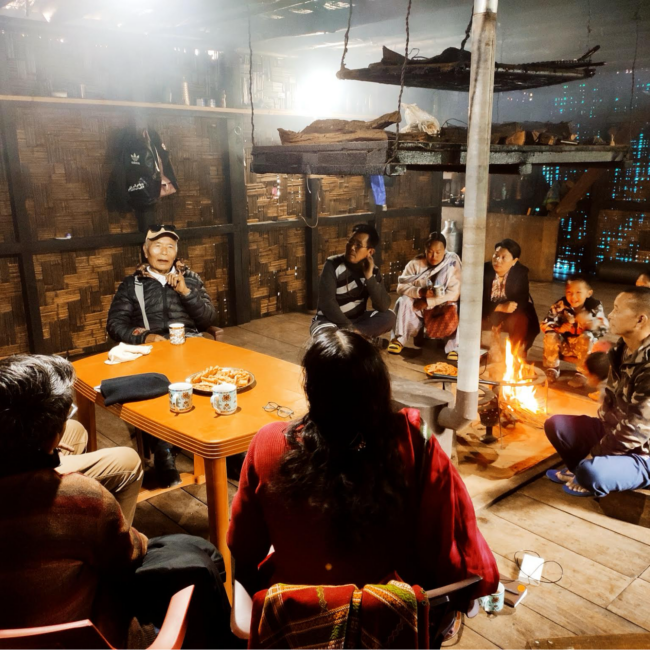
The Bundle Unrolled Just Like That, A Project Was Born
<"A eureka moment with Namge Wangmoo
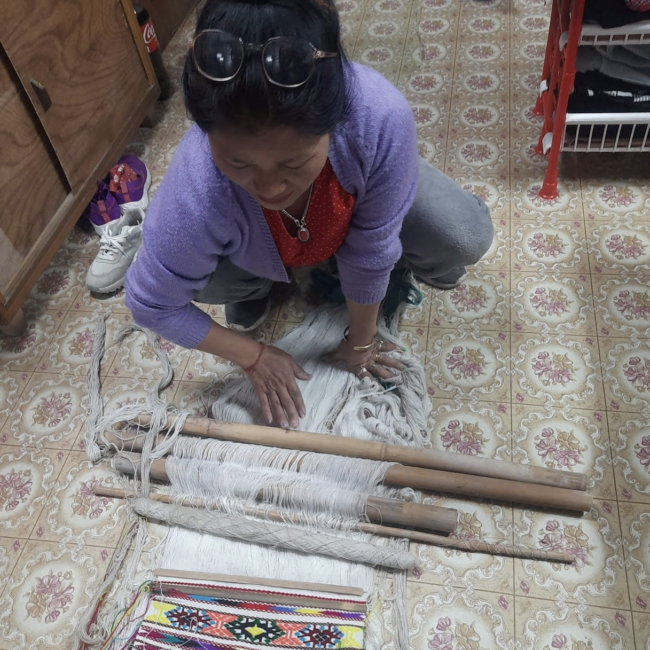
December 27th, 2023, at the house of Namge Wangmoo Glow, the Gram Panchayat Chairperson of Singchung village, I learnt how to approach this question differently. Over a long coffee in her warm kitchen, Namge suddenly exclaimed “ I understand what you want, come!”. She rushed into her room and pulled out a plastic bundle from under her cupboard. She carefully unrolled it to reveal a backstrap loom, intact with the thread wound around bamboo sticks and a half made piece of fabric came into view. “ We used to make Gale; I was making this three years ago with my sister in law, then somehow I forgot to continue”, she said. As the bundle unrolled, just like that, a project was born.
The nature of cultural memory is that it fades like evening light. When you eventually realise that it is dark, the Sun has long gone over the horizon.
FEBRUARY 2024
Remembering a Culture of Making
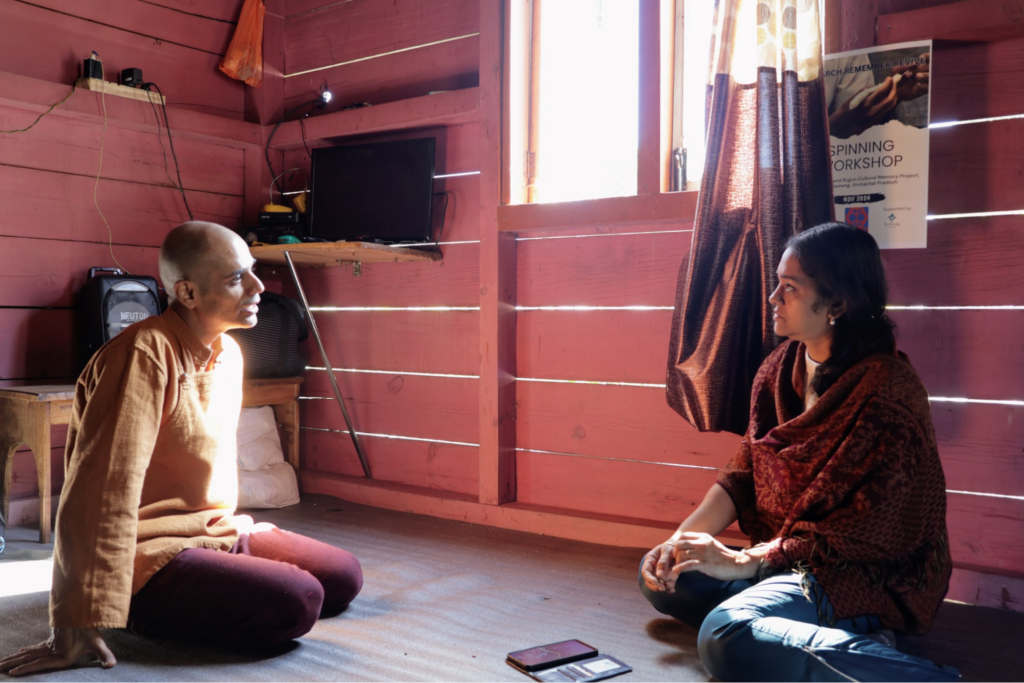
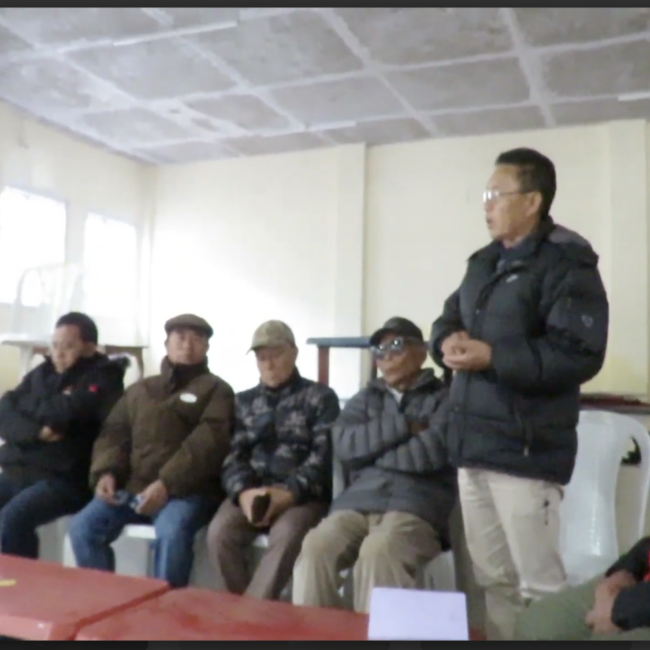
One cold February morning in 2024, the community elders of the Brai Dua clan of the Bugun from Singchung and Tenga congregated and blessed the project idea. They represented the custodians of the land, the forests and all that the Bugun held their identity. The work upto then had been about rediscovering a potential that was deeply embedded in Bugun cultural memory, forgotten due to a rapid loss of context, much akin to a fading habitat. We explained to them that our work was meant to give some form to the revival of cultural memory through a revival of crafting, language and all the stories the stories held in them. Weaving among the Bugun is not a vocation, a craft, a social phenomenon or a livelihood avenue in the manner in which urban interventions have come to see it. It is just a mode of making cloth. Discovering this culture of making among the Bugun was reassuring especially in the company of a friend who is now an indispensable cohort in this project.
Threads, sticks, leaves, knots, colors, fragrances and textures
Sachin Sachar weaves conversations together
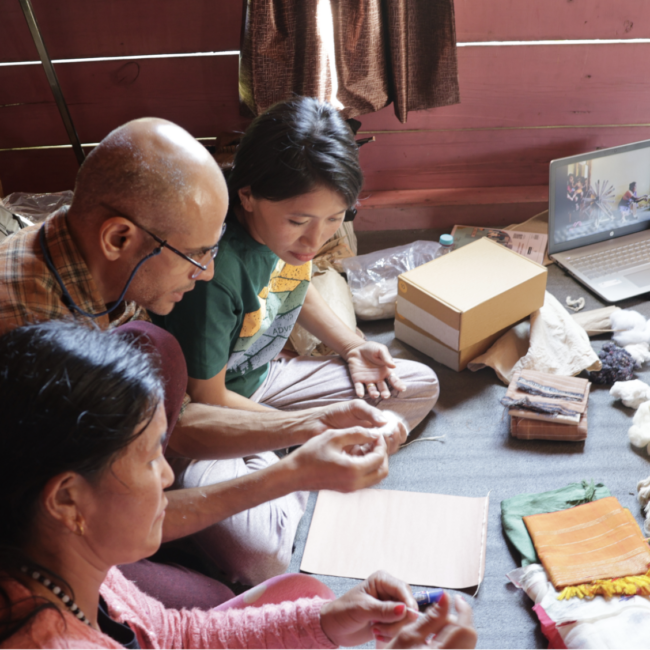
Sachin Sachar, a collector of craft stories and a designer, joined the project. His special interest and rather unusual skill is in creating conversations around objects. The discovery of the loin loom, a handful of women weavers, a supportive Gaon Bura (village leader) and Sachin’s conversations were all that we had, to begin visualising a larger project. Sachin collected and shared stories, about threads, sticks, leaves, fibres, knots, colors, fragrances and textures, but this telling led us to the right people and firmed up an association with the makers in the Bugun community.
I don’t work for a salary, I can go back into the forest again tomorrow!
An earnest encounter with Tashi Khanam
Into this ambitious effort arrived a very understanding collaborator, the Titan Company and this is what they heard on their first visit!
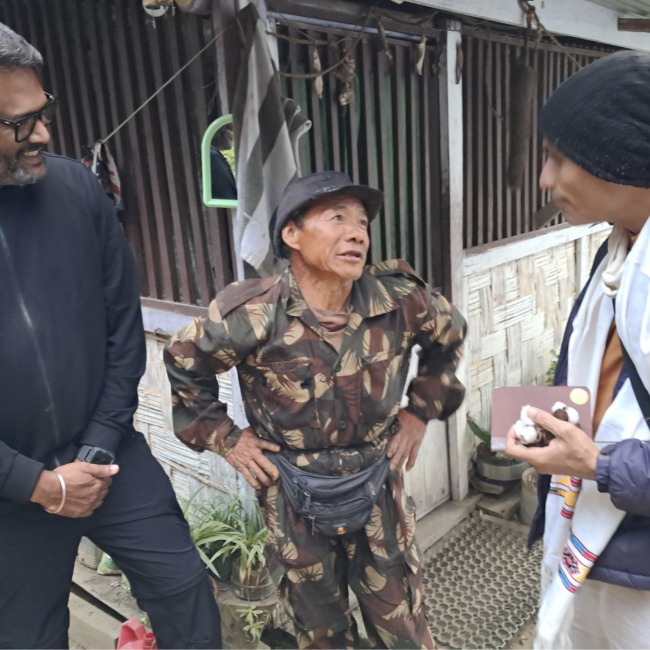
While framing this initiative as a livelihood generation effort, they still recognized the depth of the approach. Tashi Khanam, one of the elders of Dikhiyang who is a bamboo resource person in our team, had gone off into the forest to collect bamboo the day the team visited. He walked back 7kms to meet with us. When the team responded in gratitude and shock that he had to walk back the distance he said gleefully “ I don’t work for a salary, I can go back into the forest again tomorrow!”. Tashi Khanam takes youngsters of the village into the forest to familiarise them with the staggering variety of bamboo, as well as fill them with stories of another time. These are some embedded practices of working with natural fiber, that we recognize as part of an idea of sustainability. Titan Company has supported such intangible efforts with sincerity, while recognizing the importance of strengthening practice, repertoire, design identity and local markets in an effort to create sustainable livelihoods.
MAY 2024
Unclogging Cultural Memory
Collective remembering with Namge Wangmu, Anyok, Akheme, Tashi Khanam, Lam Tsering, Lambu Lagyan, Pakao, Milon Hagam, Momdaz Hagam, Rinchin Dema, Lamu Phiang, Kusum Ziri, Tashi Lamu and many more teachers and their learners
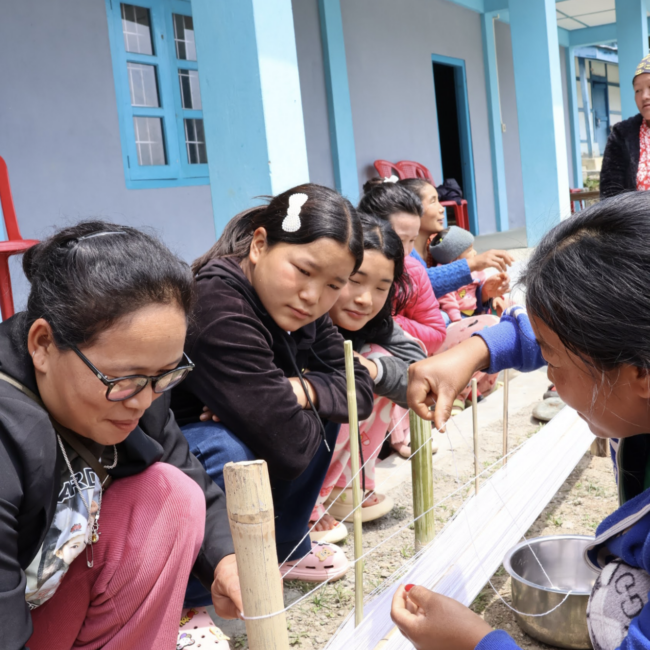
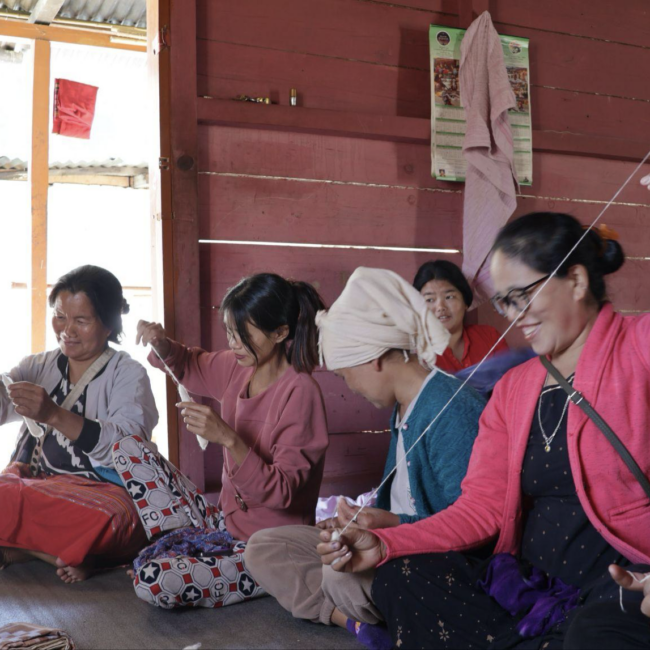
It was summer holidays. Children, infants, mothers, grandmothers huddled around the warp and the loom to learn. Men and boys sliced through bamboo under the careful watch of four supremely gifted teachers of the idyllic Dikhiyang village. The graceful hosts and the talented Bugun couple Dipu Khanam and Indra Wangmu showed us what was possible with good village leadership. Amidst fervent conversation and the ceaseless thuds of loom and the scrapping of the knife against bamboo we witnessed a veritable gushing back of memory. We refused to bring in teachers from outside. Because this was not a training program it was a revisitation of crafting to unclog collective memory. Around 45 people came to the first workshop in May. 30 were for weaving alone, 10 months later we have a weaving group that is still 28 strong, spread across 3 villages with around 8-10 weavers weaving independently.
This is Lavoi
Curious conversation with Tashi Lamu
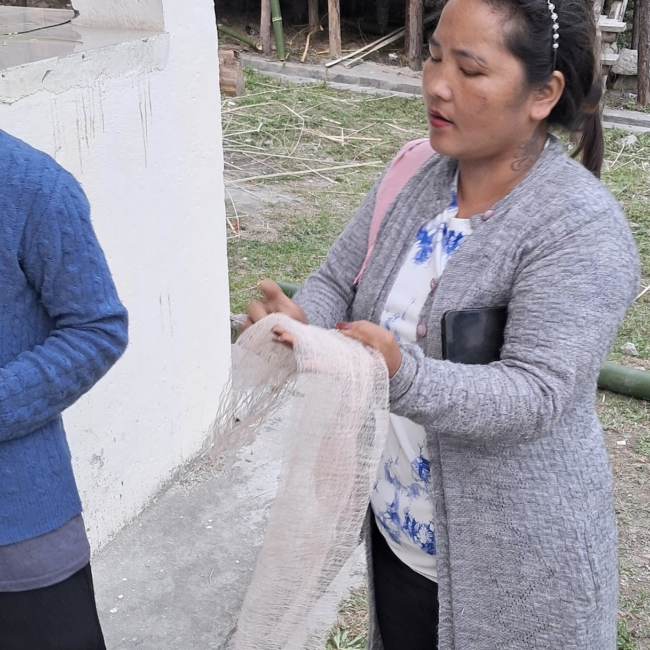
Each of the three workshops in May were accompanied by a spontaneous curation of everyday objects or old objects that people could bring to a central place. Sachin’s display framed them in a new light of significance. They became talking points. Many stories, many anecdotes and debates and discussions later, Tashi Lamu, a gifted weaver from Dikhiyang held one piece of fabric up in light, scrutinized it and said “This is Lavoi!” What ensued was a heated debate on what fibre it was made from. Shanti Lali the Zilla Parishad Member from Bichom brought out her precious collection in which we found the foldable sheet bag, the brayi. For us the next steps became clear. We now had a sample fabric of a bast fibre found in a Singchung household and a unique design for a bag. The design potential and its rootedness in Bugun culture became very clearly visible.
The “Normal Dhaga” Conundrum
Planning and pondering with Kusum Ziri
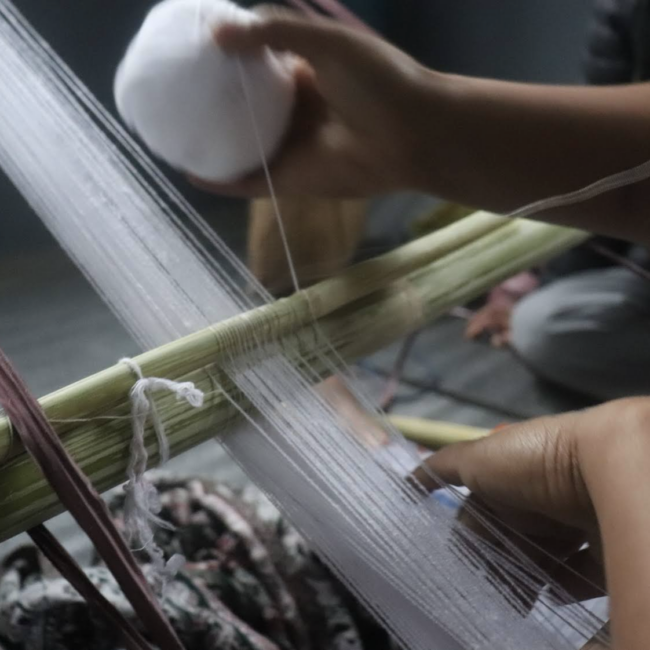
The bleached white, low-cost, Arunachali Suta which is thought to be cotton by many in the North Eastern states, is an acrylic yarn. This is a popular choice among home-based weavers all across North Eastern India. Kusum, our village coordinator from Bichom calls it “normal dhaga”. There is very little natural cotton or wool available in this area today. Hence one of the main challenges of the cloth weaving component, unlike the bamboo and cane craft, was the unfamiliarity of the weavers with their material. Introducing cotton was less a matter of principle and more a matter of promoting their relationship with a diversity of fibers, making acrylic yarn just one of many choices that they had. The first step towards autonomy of practice and informed choice is knowledge. Also, the introduction of cotton to the weavers was the first step in a movement towards working with natural fiber.
SEPTEMBER 2024
Seeing themselves as makers
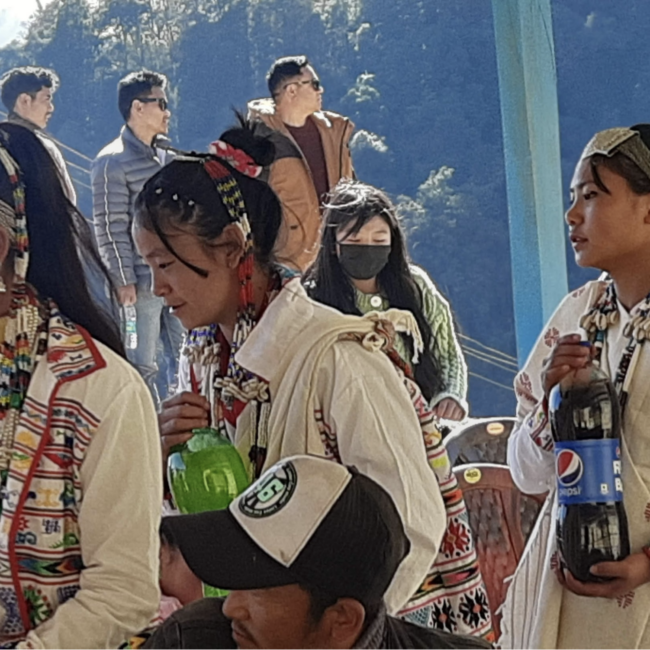
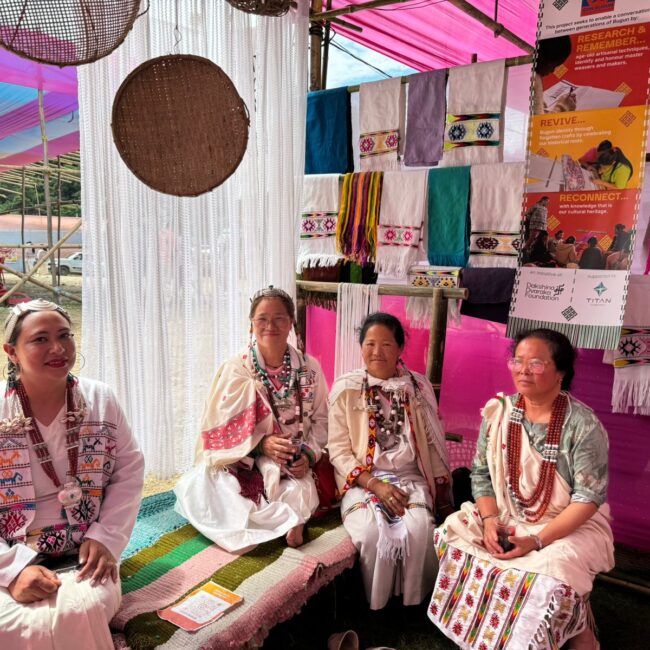
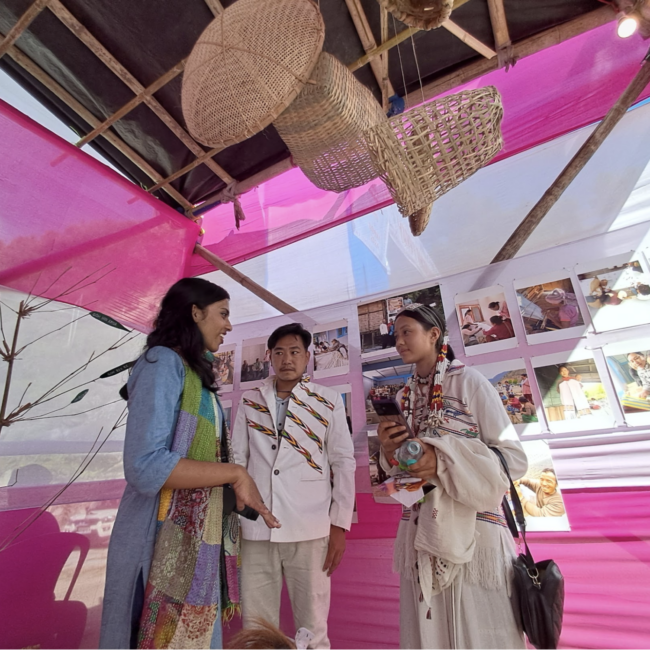
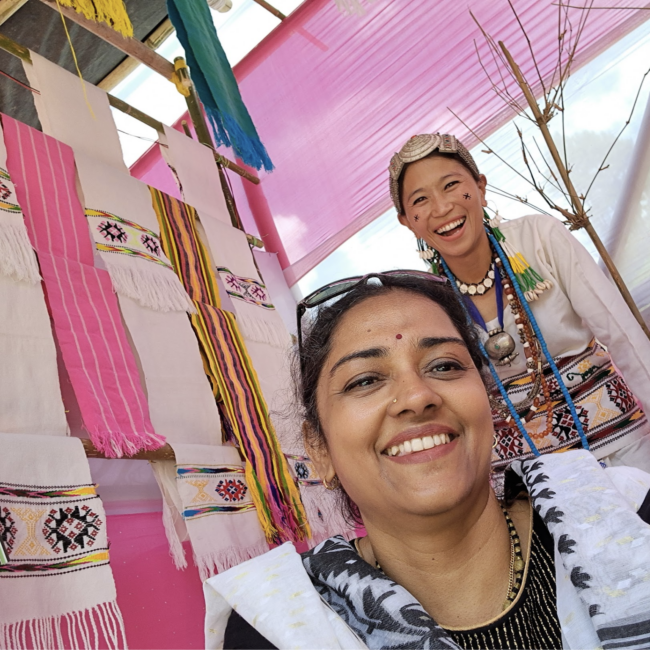
Pham Kho Sowai: The Annual Central Harvest Festival of the Bugun tribe happens every September on the banks of the Dingkho river. In September 2024, the Bugun tribe for the first time saw their own hand woven textiles on display under the Goh Bugun label.
The All Bugun Society that organised the festival supported us with a free stall. We were given bright pink stalls to work in and we made the best of it. Shivani, a young designer from NID poured herself into designing a meaningful display with an interactive corner. Bamboo was cut and slit, frames were made, display platforms were constructed, stalks adorned the stall and pine needles cushioned and cooled the floor. The stall was a hit. The project now had a brand name, Goh Bugun, it means “I am Bugun”. As such the question was, should they define themselves through Arunachali Suta, the acrylic yarn? So we decided not to sell. In the stall, stories were shared, cloth was shared, donated, gifted but not sold. From curation in May to an exhibition in September 2024 this was also been a journey for the Bugun towards seeing themselves as a community of makers.
Dancing Under a Hot September Sun
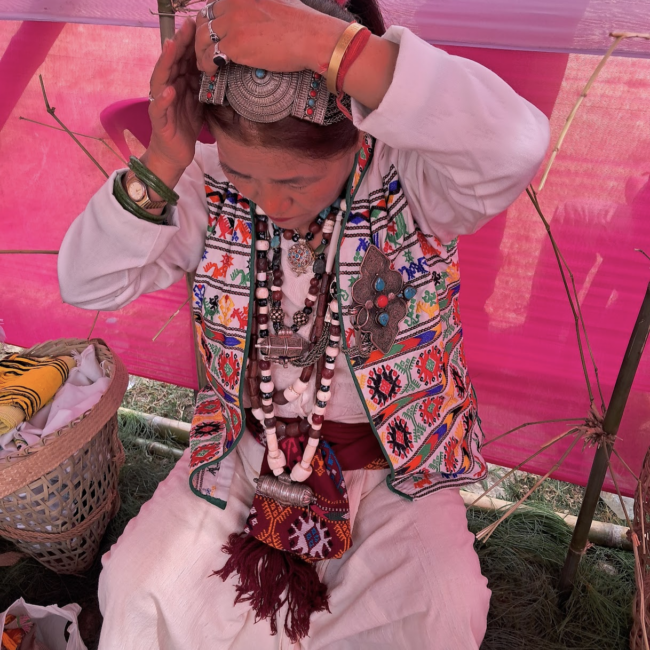
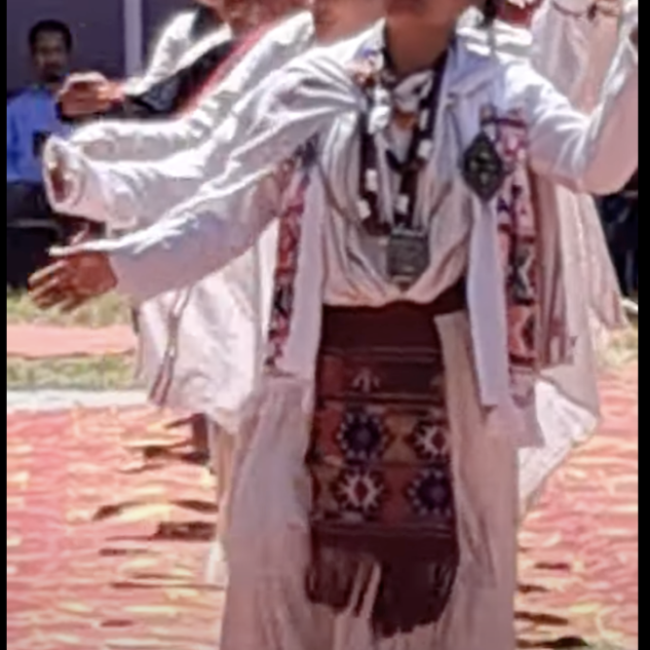
Bugun women decked in heavy silver head ornaments danced under the Sun during the Pham Kho Festival. The sun beat down fiercely but on September 10th 2024, the heat had become unbearable, the dancers rushed into our stall, the first stall that provided them shade. Their silver ornaments had heated their heads and their acrylic clothing baked them in the heat. There’s no better debater than climate change, we’re ready for cotton I thought to myself!
NOVEMBER 2024
"Hoga!" said Milon
A hopeful affirmation from Milon, while Momdas scrutinized the cotton yarn on her warp!
A community that was cradled in a rich ecosphere, had become used to acrylic yarn which goes in the name of cotton in most parts of the North East. We introduced cotton, first as a ball of fiber. Milon, one of the most skilled weavers from Sachida, a village high up on a ridge with no motorable road, was skeptical about cotton yarn. But she agreed to sit Mumdaz’s kitchen with Sachin and work a yarn out of a ball of cotton.
Outside in her verandah, Mumdaz, the strictest and the kindest of teachers who ran a veritable gurukul of weaving, ties up her first cotton warp and sat down to test the strength of the fiber. She was skeptical and had earlier refused to be part of the spinning workshop. Momdaz is not a romantic, no cotton fluff for her, she is looking for a robust fiber. Will cotton satisfy her?
Sachin gently introduced the fibre, allowing the weavers to spend time with the material and then pull yarn out of it. Milon smiles after the first 15 minutes of pulling yarn with her finger.
“ Hoga!”(it will work!) she said brightly, turning her gaze away from the yarn..
We stepped out to find Momdaz weaving, she smiled too and says “ nahi toota!”(it didn’t break) We all said “Hoga!”and that was the beginning of the next phase of the project -gently nudging out Arunachali Suta.
Finding Identity through material
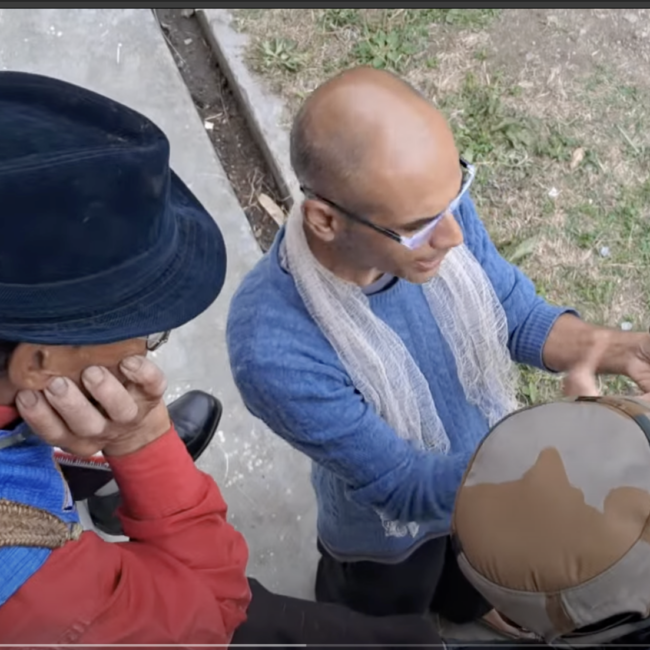
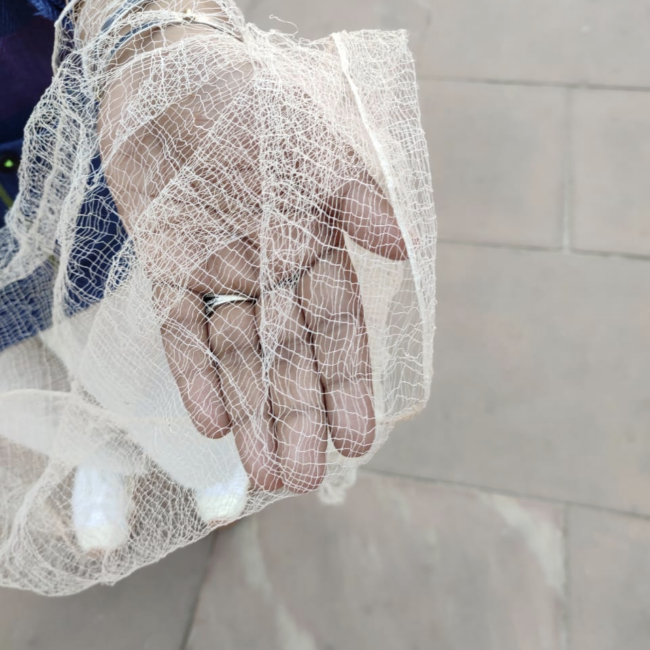
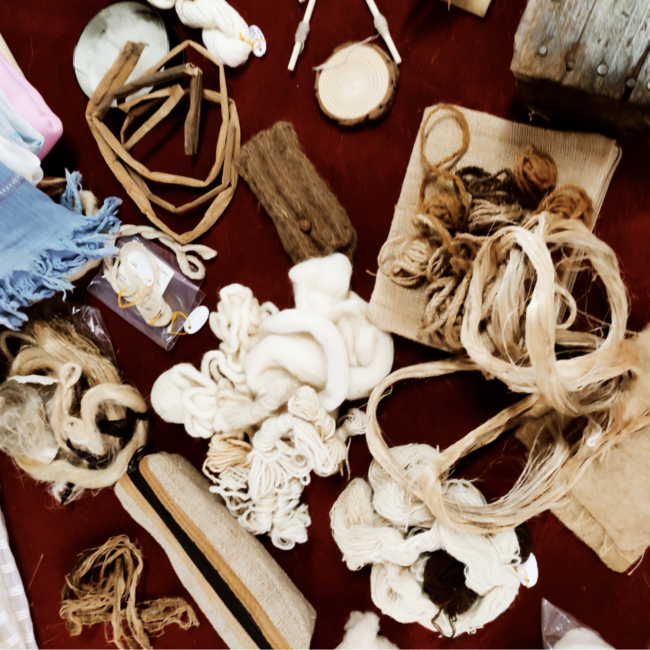
The Bugun people have a memory of nine bast fibers that were used for making various things from cloth to binders and fishing nets like the sample we found that was made out of Lavoi (local name). In November we began the survey of the availability of bast fiber plants like Lavoi, Shaung, Shkniya and Hnchong (Bugun names). And with this we started a concerted effort to build a team and work towards our next “Hoga!” moment!
Bast fiber could potentially become the material identity of the Bugun’s culture of making. While cotton fabric can continue to be their own cultural product, bast fiber could go out into the world, representing the traditional knowledge and skill of the community.
Connecting back to move forward
Sustainable consumption may be a new idea for the modern world. But learnings of an old culture that lives amidst natural diversity for ages could enhance an understanding of sustainability suitable for current contexts.
This project tests a social design that Sachin and I have learned as Guru Bandhus who owe much to our teacher Shri Ravindra Sharma of Adilabad, Telangana. We have attempted to translate our learnings into a pragmatic approach for communities that live in similar contexts, rolling in three considerations- a strong local market along with a robust ecotourism market as the goal; connecting back to move forward as a methodology and enabling confidence through strengthening existing knowledge as the mantra.